
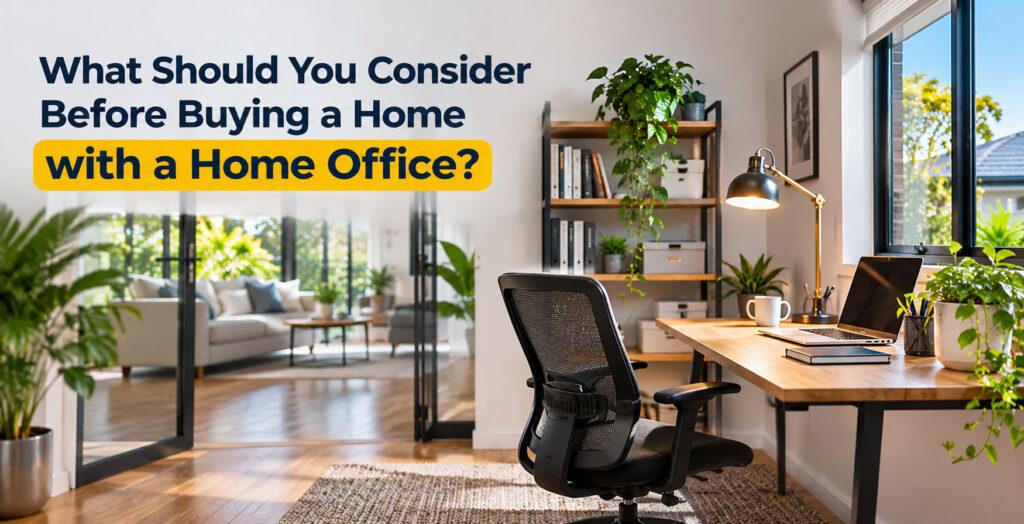
Picture a buyer at an open home. The listing mentions a “study”, and it’s a decent size, so they tick that box and move on. Then they notice the room opens straight off the kitchen and sits beside the family room. Imagine a video call at 10am on a school holiday day, with the dishwasher running and kids next door. The room was never really a place to work, and it only counted as a study because the floor plan said so.
That’s the trap when you’re buying a home with a home office. A spare room is only the start. Whether the space works depends on where it sits in the house, how quiet it is, how it gets light and air, whether the internet is good enough, and what rules apply if you do more than answer emails. This guide covers what to check before you commit, so you can judge the property as a whole. If you’re still early in the process, our overview of buying a property is a good place to start.
Why a Home Office Can Influence Your Property Search
For many buyers, working from home, at least part of the week, has changed what they look for in a house. Instead of asking only “how many bedrooms?”, they ask where they’ll actually sit and work.
The workspace can shape your daily routine, how easily you can concentrate, how clearly work and home life are separated, and how the household shares the house. It can also change how important a property’s layout is, and how much flexibility you want as your situation changes.
It’s worth keeping that in proportion. A good workspace is one factor among many, such as location, price, condition and your commute. If you’re a hybrid worker, our guide to living near a light rail station covers one aspect of the days you’re not at home, and our suburb profiles can help you compare areas.
Does the Property Have a Truly Suitable Workspace?
Not every room labelled “study” or “home office” is suitable for regular work. Here are the common types and what to ask about each.
- Dedicated home office. A room with a door, set up for work. Check its size, its position in the house and whether it’s usable day in, day out.
- Study nook. A desk-sized alcove, often off a hallway or living area. Great for light work, but usually weak on privacy and noise.
- Spare bedroom. Often the most private option, but you may need to fit a desk and still keep the room usable as a bedroom.
- Converted room. A garage or other space turned into an office. Ask what the conversion involved and whether it was approved (more on that below).
- Separate studio. An outbuilding gives physical separation from the house, but it needs its own power, internet and comfort, and should have the right approvals.
Think about what you’d actually do in the room. A good workspace has enough space, works for your tasks, offers privacy when you need it and could be repurposed later.
Location and Privacy Within the Home
Where the workspace sits inside the house often matters more than how big it is. When you inspect, walk the route from the front door to the workspace and ask yourself a few things:
- Is it away from the kitchen, family room and entertaining areas?
- Would household traffic pass by or through it?
- Could you take a call without being overheard, or overhearing everyone else?
- Is it near bedrooms, which can matter if you work odd hours or share the house with someone who does?
- Can people reach it without disrupting everyone else?
A room at the end of a hallway, or on a separate level, often does better than one beside the main living area. If you’re looking at a multi-level home, an upstairs or downstairs office can create useful separation, though it may also be further from the rest of the household.
Noise and the Working Environment
Noise is easy to underestimate during a short inspection. Consider road traffic, neighbours, nearby construction, household activity, schools and local businesses, as well as outdoor noise. In apartments and townhouses, shared walls can add another layer. If you’re looking at a complex, our guide to buying a townhouse in a gated community covers what else to ask.
The Australian Government’s YourHome guide to noise control recommends visiting at different times of the day if you’re buying, and notes it can be very difficult or expensive to fix a noise problem after you’ve bought. It also suggests thinking about sources like shops, hotels and rubbish collection. For a unit, it recommends asking about the design specifications for noise levels.
For a work-from-home buyer, that translates to a simple plan. Go back at a different time, such as a weekday morning when you’d actually be working. Stand in the workspace, close the door and listen. If you can, test it during school drop-off or peak traffic.
Natural Light, Ventilation and Comfort
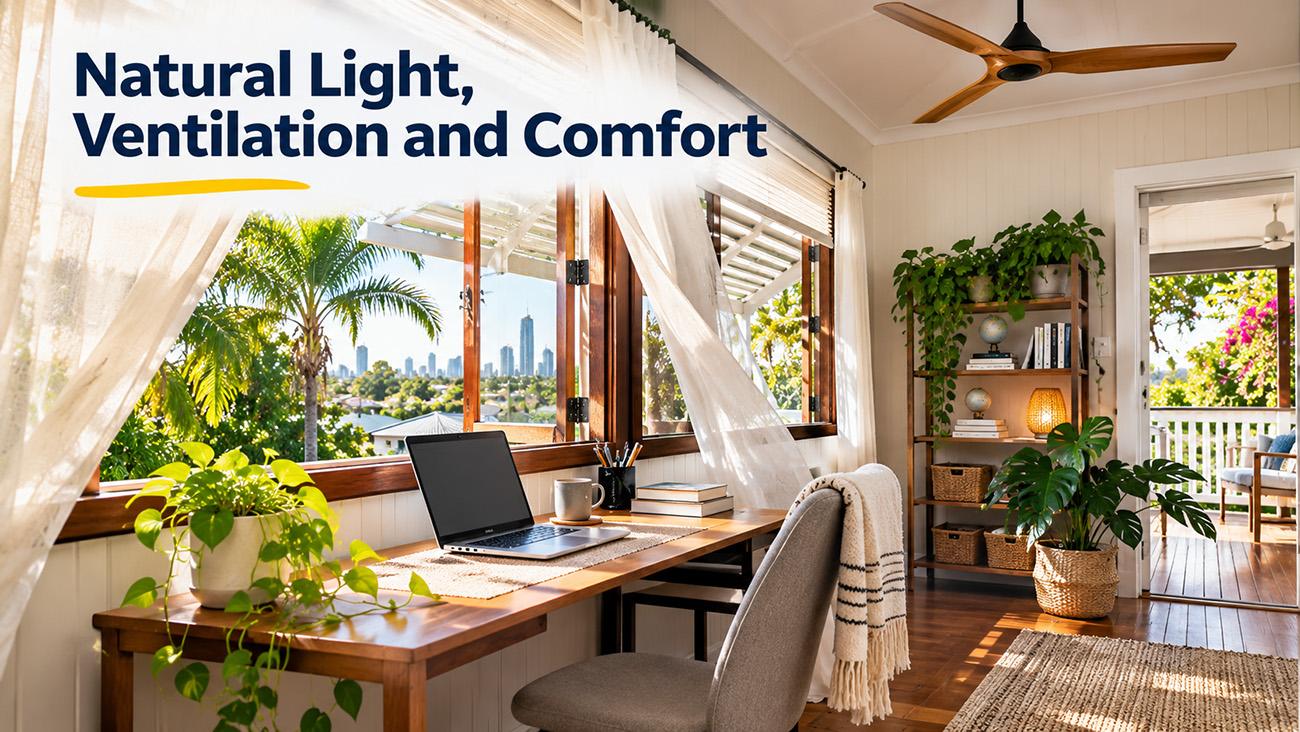
A workspace you can’t comfortably sit in during the afternoon won’t get used. Look at where the windows are, how the sun moves across the room, and whether it would bounce off a screen. Glare and heat can ruin an otherwise good room.
YourHome explains that orientation affects how a home gets sun and breezes, and its passive cooling guidance highlights the role of shading windows and allowing airflow. On the Gold Coast, where summers are warm and humid, check whether the room has shading, windows that open and a way for air to move through. Also check how it feels in the afternoon, not just at the 11am inspection.
Take a laptop, or just sit in the spot where your screen would go, and see how the light falls.
Internet Connectivity and Technology Considerations
If you’ll be on video calls or uploading large files, don’t assume the internet is fine. Before you make an offer, enter the address into the nbn rollout map. The tool shows whether the address can connect, and the Australian Government notes that it also shows which technology will serve the property. The nbn also warns that some premises can’t connect at all.
Availability doesn’t guarantee a good experience. The technology type, the provider and the plan you choose all shape what you get, and so does the setup inside the house. A few practical checks:
- Ask the agent or seller what internet service is currently connected, and how it performs.
- Check mobile reception inside the workspace, since a backup hotspot may matter.
- Note how far the workspace is from where the router would sit, and whether the layout could affect Wi-Fi.
- Look for network points in the walls and check the condition of the wiring.
- Be extra careful with older homes, unusual layouts, and apartments and townhouses, where the connection arrangements can differ.
If connectivity is critical to your income, talk to a provider about what’s available at that exact address before you commit.
Space, Storage and Practical Setup
Think about your actual work, not a generic desk. Do you need two monitors, a printer, filing cabinets, a second chair for clients, or shelving for stock? Do you work standing or seated, or both?
When you inspect, check:
- Room dimensions, and whether a desk, chair and storage fit without crowding the door.
- The number and position of power points, and where cables would run.
- Lighting, including whether overhead lights suit screen work.
- Storage, in the room or nearby. In a multi-level home, our ideas for under-stair storage show what’s possible.
- Accessibility, including steps, doors and room to move around.
- Space for future equipment.
If the room needs extra power points or new wiring, speak to a licensed electrician about what’s involved before you buy.
Is a Home Office Suitable for Your Household?
A workspace that suits one person can fall apart with two. Think about how the house would handle everyone’s routines at once.
A couple who both work from home may need two separate spaces, or at least two spots where simultaneous calls won’t clash. Families with children need to think about noise, supervision and homework time. Shift workers may need a quiet space at odd hours that doesn’t wake the household. Hybrid workers might get by with a flexible nook, while freelancers and small business owners often need more storage and a more private room. If several people need workspace at the same time, a layout with a spare bedroom, a study and a quiet corner elsewhere may suit better than one big room.
Dedicated Office vs Flexible Space
A dedicated office can make it easier to separate work and home life, since you can close the door and leave. It also suits people with a lot of equipment. The downside is that it takes up a room you might need for something else later.
A flexible space, such as a spare bedroom, a multi-purpose room or a nook, costs less in floor space and can adapt when circumstances change. It might also be harder to keep work contained, and it may not be private enough for sensitive calls.
Neither is automatically better. If your work arrangements, family or plans might change, a room that can work as an office today and something else tomorrow may be the smarter choice. If you work from home full time with specific equipment, a dedicated room might be worth more. A studio in the backyard can offer both separation and flexibility, but only if it was built with the right approvals.

Can You Run a Business from the Property?
Working remotely for an employer is generally different from running your own business from a residential property. If you plan to see clients, employ people, store stock or put up a sign, the rules matter. Whether you can do any of this depends on the property, the zoning and what the business does, so don’t assume a home is suitable because of how it looks.
The City of Gold Coast describes a home-based business as one that operates from a dwelling where the business is secondary to the residence. It says development approval isn’t needed if the property is in a residential zone, the business meets the City Plan’s home-based business code and any other applicable codes, and it isn’t a bed and breakfast. It also warns that a City Plan overlay may trigger the need for approval, and that some activities, such as food preparation, may need a permit. If the business doesn’t meet the requirements, a development application is required before you start.
For a unit or townhouse, the body corporate adds another layer. Queensland Government guidance explains that the local council decides whether a business can operate from a residential lot, but the scheme’s by-laws still apply. When you buy into a scheme, the body corporate certificate and by-laws are among the documents to review. Our guide to what a body corporate covers explains the basics.
If you’re planning anything beyond a quiet office, ask the council before you buy.
What Should You Check During a Property Inspection?
It’s easy to look at a room and judge it by how it’s staged. Try to test it instead. Bring a tape measure, your laptop and phone, and imagine your normal working day.
- Measure the room and sketch where your desk, chair and storage would go.
- Sit at the desk position and check glare, light and the view.
- Listen with the door closed, and consider a second visit at a different time.
- Check privacy: who passes the door, and where sound travels.
- Check airflow and temperature, including windows and shading.
- Count power points and look for data points.
- Test your phone’s reception inside the room.
- Ask about the internet at the address and how it currently performs.
- Ask about approvals for any conversion, extension or studio. The City of Gold Coast explains which building works need approval, and a conveyancer or building professional can help you check the paperwork.
- Think about future use: could this room become a bedroom, a nursery or a guest room?
Does a Home Office Add Value to a Property?
A home office can make a home more appealing to some buyers, but it doesn’t automatically raise its market value. How much it matters depends on the location, the quality of the space, what buyers in the area want and whether the room has other uses. A well-placed, flexible room is likely to appeal to more people than an awkward one labelled “office”. Treat it as something that might make a home easier to live in and easier to sell, not as a guaranteed boost.
A Home Office Property Buying Checklist
Save this list for your inspections.
- Location: is the workspace away from busy parts of the house?
- Privacy: can you take calls without being overheard?
- Noise: have you listened at different times of day?
- Light: is there good natural light without screen glare?
- Ventilation and comfort: does it stay comfortable in the afternoon?
- Internet: have you checked the address with nbn and asked about the current service?
- Mobile reception: did you test it inside the room?
- Power and equipment: are there enough power points and room for your setup?
- Storage: is there somewhere for files, stock and equipment?
- Household fit: will it work if more than one person works from home?
- Flexibility: can the room serve another purpose later?
- Approvals: were any conversions or studios approved?
- Council or body corporate: if you’ll run a business, have you checked the rules?
Final Thoughts
A good home office isn’t just a room with a desk. It’s the combination of location, quiet, light, connectivity and flexibility that makes working from home practical. When you’re inspecting, look beyond the word “study” on the floor plan and ask whether the space genuinely supports your work and the way your household lives. Testing it yourself, and checking the details that don’t show up in photos, is the best way to find out.
This article is general information only and isn’t legal, planning or financial advice. For advice on a specific property, speak to your conveyancer, the City of Gold Coast or another relevant professional.