
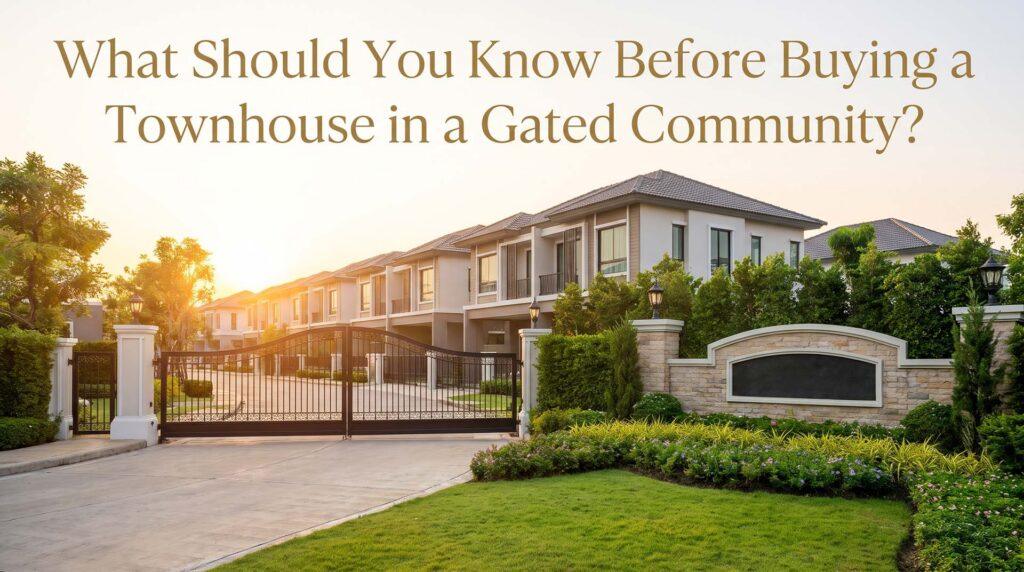
Buying a townhouse in a gated community can look like the best of both worlds: more space and privacy than an apartment, less upkeep than a standalone house, and a security gate at the front. But the gate is only the visible part. What you are really buying into is a shared way of living, with shared costs, shared rules and shared decision-making.
This guide explains what to check before buying a townhouse in a gated community on the Gold Coast or elsewhere in Queensland, from body corporate fees and by-laws to visitor parking and the documents your solicitor or conveyancer should review. It covers the genuine benefits as well as the drawbacks, so you can decide whether this type of home suits you. If you’re still exploring your options, learn more about the property buying process on the Gold Coast.
This article is general information only and is not legal or financial advice. Your solicitor or conveyancer can advise on the contract and documents for a specific property.
What Is a Gated Community Townhouse?
A gated community is a residential development with controlled vehicle or pedestrian entry, usually through a boom gate, security gate or key-fob access. A gated community townhouse is a townhouse inside one of these developments. Complexes range from a small group of townhouses behind a single driveway gate to a large resort-style estate with its own pool, gym and tennis courts.
Most townhouse complexes are made up of privately owned lots and shared spaces. You own your townhouse and the lot it sits on, while the driveways, gardens, pools and other shared areas are usually “common property” owned collectively by all the lot owners.
A gate does not automatically mean a body corporate
“Gated community” describes how access works. It does not, on its own, tell you how the property is legally structured. In Queensland, most townhouse complexes are part of a community titles scheme, which has a body corporate. According to the Queensland Government, a body corporate property can be a duplex, a unit block, or a larger plan that includes townhouses and freestanding houses.
Not every body corporate operates under the same legislation, either. Most are regulated by the Body Corporate and Community Management Act 1997, but some older or specialised schemes fall under other Acts. Your solicitor can confirm how a particular property is registered, and Titles Queensland can also tell you which legislation applies.
What Are the Benefits of Living in a Gated Community?
The benefits below are common, but none of them is guaranteed. Each complex is different, so treat these as things to look for rather than things to assume.
Controlled Access and Privacy
Gated entry means fewer people can drive or walk in without a reason. Many residents like the quieter feel this creates, with less through-traffic and fewer strangers passing the front door. Ask how access works in practice: how visitors get in, how fobs or remotes are issued, and what happens when a gate breaks.
Shared Lifestyle Facilities
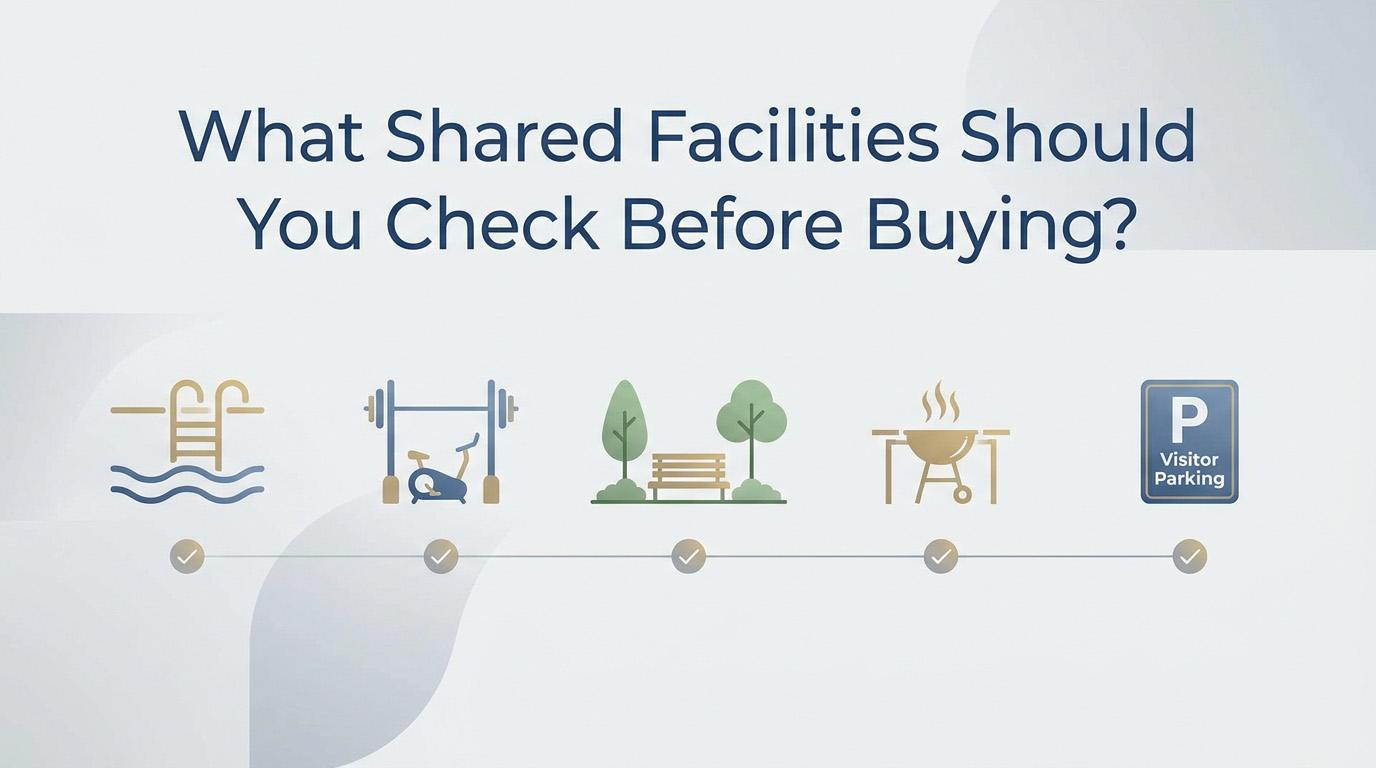
Some complexes include a swimming pool, spa, gym, tennis court, BBQ area or landscaped gardens. For buyers who want those things without owning them outright, sharing the cost can be attractive. The trade-off is that you contribute to their upkeep whether you use them or not.
Shared Maintenance Responsibilities
Gardens, driveways and other common areas are generally maintained collectively through the body corporate, rather than by each owner individually. If you would rather not spend weekends maintaining shared grounds, this can be a real advantage. It does mean those costs are paid through levies.
A Community Living Environment
Some buyers enjoy the neighbourly feel of a well-run complex, and the shared standards that come with it. Others find the same environment a little too close for comfort. Visiting at different times of day and speaking to current residents will tell you more than any brochure.
Is a Gated Community More Secure?
Not automatically. A security gate can discourage casual access, but it is only one part of a property’s overall security, and it does not make a community crime-free.
When inspecting, look at the actual arrangements rather than the presence of a gate:
- How the gates and access systems operate, and who manages them.
- How visitors are admitted, and whether pedestrian gates are kept secure.
- Whether there is CCTV, and who is responsible for maintaining it.
- Whether common areas, driveways and walkways are well lit.
- How well the gates, fences and lighting are maintained.
- The security of your own townhouse, including locks, windows and garage access.
It is also worth considering the surrounding location and talking to residents about their experience.
What Shared Facilities Should You Check Before Buying?
Shared facilities can add a lot to everyday life, but they can also add a lot to the budget. Before buying, find out:
- Condition: are the pool, spa, gym, courts and BBQ areas operational and well maintained?
- Responsibility: who arranges and pays for repairs and replacement?
- Access: are there opening hours, booking systems or restrictions on guests?
- Costs: how are maintenance costs reflected in the levies?
- Future work: are significant repairs or upgrades likely, and has the body corporate planned for them?
Other shared spaces matter too, such as shared driveways, landscaped gardens and visitor parking areas. Meeting minutes and financial records (covered below) are often the best place to learn whether a facility has been a headache.
What Should You Know About Body Corporate Before Buying?
This is the part of the purchase that catches many first-time townhouse buyers off guard, so it is worth understanding properly.
What a body corporate is
The Queensland Government describes the body corporate as an entity made up of every person who owns a lot in the scheme. When you buy a lot in a body corporate property, you automatically become a member and cannot opt out.
Private property and common property
Your lot is yours. The common property, such as shared driveways, gardens and facilities, is owned collectively and looked after by the body corporate. Some schemes also give particular owners exclusive use of part of the common property, such as a courtyard or parking space. In that case, you may be responsible for maintaining that area.
Your responsibilities as an owner
According to the Queensland Government, lot owners are responsible for keeping their lot in good condition, must follow the by-laws that apply to the property, must not cause a nuisance or hazard, and must not unreasonably interfere with others who are lawfully using their lot or the common property.
Committee and manager
Day-to-day decisions are generally made by a committee elected from among the owners, and many schemes also engage a body corporate manager to handle administration. The quality of this management can strongly affect how a complex runs, so it is worth reading the recent minutes to see how decisions are made and how well issues are resolved.
The exact arrangements depend on how the property is registered, so confirm the structure with your solicitor before you sign anything.
How Much Do Body Corporate Fees Cost and What Do They Cover?
Body corporate levies are the regular contributions owners pay to cover the scheme’s running costs. There is no standard amount. Levies differ between complexes depending on factors such as the age and condition of the common property, the facilities on offer, and the insurance and management arrangements, so be wary of anyone quoting a “typical” figure.
Levies are generally split into two funds:
- Administrative fund: everyday running costs such as insurance, gardening, cleaning, management fees and routine repairs.
- Sinking fund: money set aside for larger, less frequent expenses, such as repainting, resurfacing driveways or replacing major equipment.
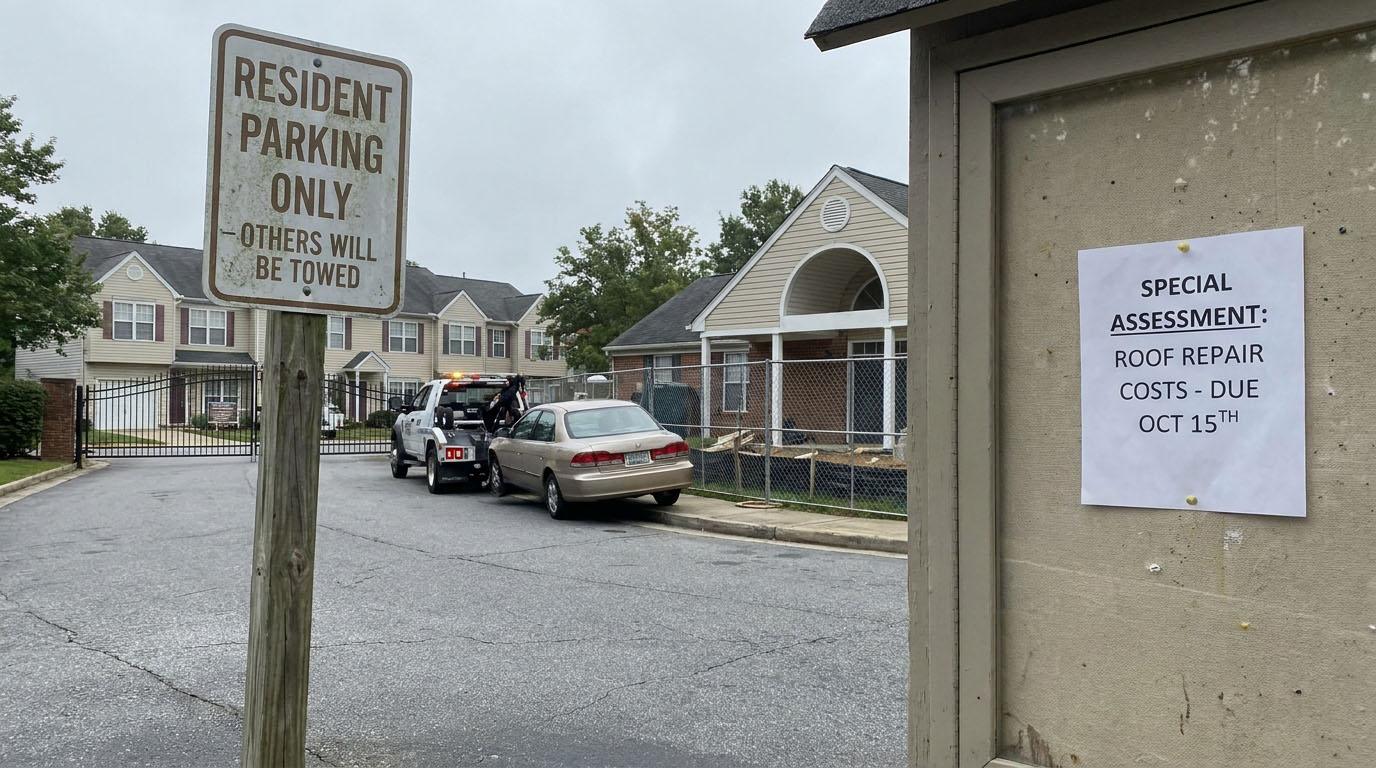
It is also possible for a body corporate to raise an additional contribution, sometimes called a special levy, when there is an expense the existing funds do not cover. That does not happen in every scheme, but it is a good reason to look closely at how healthy the funds are.
What to review before you commit
- The current levy amounts and how they are charged.
- The latest financial statements and budget.
- The sinking fund balance and any plans for major works.
- Meeting minutes that mention proposed levy increases or large expenses.
- Insurance details, including what is covered and who is responsible for what.
Ask for these in writing rather than relying on verbal estimates, and have your solicitor or conveyancer review them with you.
What Are the Rules in a Gated Townhouse Community?
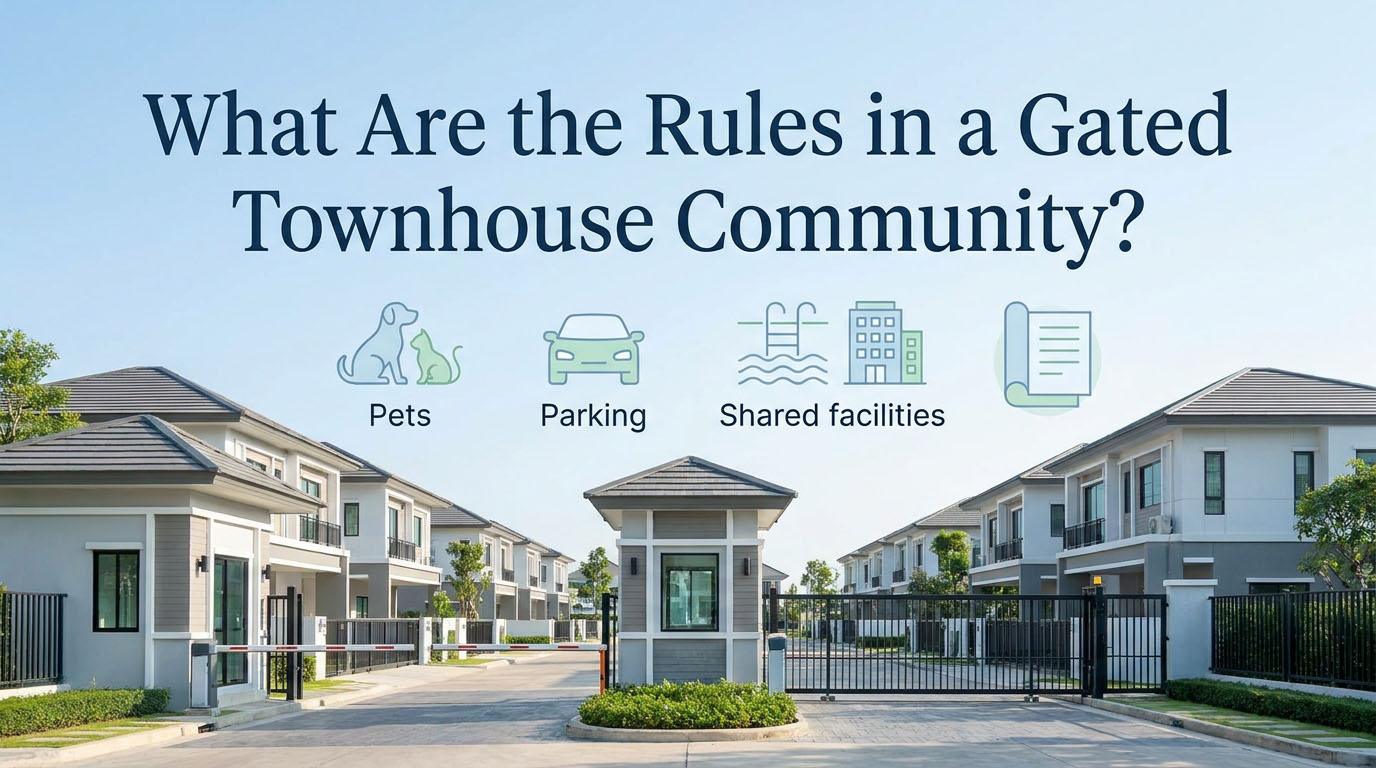
Every scheme has by-laws, which are the rules owners and occupiers must follow. The Queensland Government notes that by-laws commonly cover issues like noise, pets and parking, and that the by-laws for the property you are considering will tell you what you can and cannot do, and what you would need permission for.
Common areas covered by by-laws include:
- Pets: whether pets are allowed, how many, and whether approval is needed.
- Noise: quiet hours and expectations around gatherings.
- Parking: where residents and visitors may park.
- Shared facilities: pool hours, guest limits and booking requirements.
- Outdoor entertaining: use of courtyards, balconies and communal BBQ areas.
- Renovations and alterations: what changes need body corporate approval.
- External appearance: changes to colours, fences, screens, awnings or plants.
- Common property: what you can and cannot do in shared areas.
These rules vary from scheme to scheme, so read the registered by-laws for the actual complex rather than assuming. If you want to renovate, keep a pet or run a business from home, check those details before you buy, not after.
What Should You Know About Visitor Parking?
Visitor parking is one of those details that seems minor until you are living with it. Parking arrangements are generally governed by a scheme’s by-laws, and sometimes by signage, and they differ from complex to complex.
Questions to ask:
- Are there visitor spaces, and are they clearly marked?
- Do visitors need permission, a permit or registration?
- Are there time limits?
- Can residents use visitor spaces?
- How are parking rules enforced?
- Is there enough parking if you regularly host family or friends?
Also check how many car spaces come with the townhouse, and whether any are exclusive-use areas. If you have more than one car, work or tradies visit regularly, or you enjoy having people over, it is worth visiting on a weekend evening to see how parking actually works.
What Documents Should You Check Before Buying a Townhouse?
Queensland’s seller disclosure scheme started on 1 August 2025. Under it, sellers must give buyers key information about the property before the contract is signed. The Queensland Government says the seller disclosure scheme requires a seller disclosure statement (Form 2) and prescribed certificates, and for a lot in a community titles scheme, these include a community management statement and a body corporate certificate. A buyer may have a right to terminate the contract if the seller does not comply, and the scheme does have exceptions, so ask your solicitor how it applies to your purchase.
Beyond the mandatory documents, a thorough buyer will usually also want to look at:
- Seller disclosure statement: key details about title, planning, buildings and rates.
- Body corporate certificate: a summary of the scheme’s levies, insurance, by-laws and other matters that affect you as the owner.
- Community management statement (CMS): the scheme’s governing document, which records the by-laws and lot details.
- Registered by-laws: the rules that will apply to you.
- Financial statements and budget: the scheme’s financial position and spending.
- Current levy information: what you will be paying, and when.
- Committee and general meeting minutes: decisions, disputes and planned works.
- Insurance details: what the body corporate insures and what is left to you.
- Survey plan and lot boundaries: exactly what you own.
- Records of improvements: whether alterations to the townhouse were approved.
- Maintenance information: any known problems or upcoming major work.
You can ask to see the body corporate’s records
According to the Queensland Government, the buyer of a lot can ask to inspect or get copies of a body corporate’s records. You need to make a written request and pay the applicable fee, and the body corporate must provide access within seven days of receiving the request and the fee. It helps to be specific about what you want to see, such as meeting minutes, contracts and financial information.
Have your solicitor or conveyancer review the contract and these documents before you sign. They can explain anything unclear and flag potential problems.
What Are the Potential Disadvantages of Living in a Gated Community?
Gated townhouse living is not for everyone. Consider these possible drawbacks:
- Ongoing levies: these are an extra cost on top of rates and insurance, and they can change over time.
- More rules: by-laws can limit pets, noise, parking and how you use your space.
- Less freedom to change the exterior: alterations may need approval.
- Shared facility upkeep: repairs can cause closures, and major work may be expensive.
- Visitor parking limits: not every complex has enough spaces.
- Privacy and noise: townhouses share walls or sit close together, and the experience varies.
- Dependence on management quality: a poorly run scheme can affect your costs and enjoyment.
- Unexpected maintenance costs: older complexes in particular may face significant works.
None of this means gated communities are a poor choice. Many are well run and well loved. The experience depends on the particular complex and how it is managed, which is why the checks above matter.
Is a Gated Community Townhouse Right for You?
Compare what the property offers with how you actually live. Consider:
- Family size and lifestyle: is there enough indoor and outdoor space, and is the community suited to children?
- Shared facilities: will you use them enough to justify paying for them?
- Parking needs: do you have enough space for your vehicles and visitors?
- Pets and outdoor space: do the by-laws and layout suit them?
- Privacy: how close are your neighbours?
- Accessibility: are the stairs, paths and shared areas workable for you now and in the future?
- Budget: can you comfortably afford the purchase price, levies and other ownership costs?
- Comfort with rules: are you happy to work within community decisions and by-laws?
A townhouse also differs from a standalone house in some practical ways. You typically have a smaller private yard, you share some costs and decisions with neighbours, and you have less control over the exterior. For some buyers that is a fair trade for lower maintenance. For others it is a deal-breaker.
Final Things to Consider Before Making Your Decision
Before you commit, make sure you have:
- Inspected the townhouse and the shared areas, ideally at different times of day.
- Confirmed how the property is legally structured.
- Reviewed the body corporate fees, financial records and sinking fund.
- Read the by-laws, including those on pets, renovations and parking.
- Checked visitor parking and how many spaces your lot has.
- Understood insurance and maintenance responsibilities.
- Had a Queensland solicitor or conveyancer review the contract and body corporate documents.
A gated townhouse can be a comfortable and practical home, provided you go in with clear expectations about the costs, the rules and the way the community is run. Take your time, ask questions, and judge the property on what it genuinely offers rather than on the gate alone.