
A backyard pool suits the Gold Coast lifestyle. The warm climate, long summers and outdoor entertaining make it easy to see why so many buyers want one. But the listing price only tells you what the property costs on day one. A pool also brings cleaning, water treatment, electricity, repairs and safety responsibilities that carry on for as long as you own it.
This guide covers the hidden costs of owning a swimming pool, what Queensland pool safety rules require, how maintenance changes through the year, and what to check before buying a home with a pool. It isn’t meant to put you off. A pool can be a great feature for the right household, as long as you know what you’re taking on.
This is general information only. It isn’t legal, electrical or financial advice, and costs vary a lot between properties.
Is Owning a Swimming Pool More Expensive Than You Think?
For many households, yes. Often it’s less about one big bill and more about lots of smaller, regular ones: chemicals, power, a replacement part here and there, and a fence that needs fixing. Because these costs come in gradually, they’re easy to underestimate when you’re comparing a house with a pool to one without.
Pool costs also vary a great deal. Pool size, equipment age, how much you use the pool, whether it’s heated, and how many trees overhang it all affect what you’ll spend. No single figure applies to every home, so this article avoids giving one.
What Are the Ongoing Costs of Owning a Swimming Pool?
Regular Pool Cleaning
Keeping a pool clean is a routine job. It usually includes:
- skimming leaves and debris off the surface
- vacuuming the pool floor
- brushing the walls and steps
- emptying the skimmer and pump baskets
- cleaning or backwashing the filter
You can do this yourself, which costs you time and the price of tools and equipment. Or you can pay a pool service to do it. Either way, the workload depends on the property. A pool under mature trees collects far more debris than one in an open yard, and larger or heavily used pools generally need more attention.
Water Treatment and Pool Chemicals
Pool water needs to stay balanced to be hygienic and to protect the pool surface and equipment. That means keeping a sanitiser at the right level and regularly testing pH and alkalinity. Heavy use, hot weather and heavy rain can all throw the balance off and mean extra treatment.
Many Gold Coast pools use a saltwater chlorinator. These are often described as “chemical-free”, but that isn’t accurate. A salt system generates chlorine from the salt in the water, and you’ll still need to test and balance the water. The chlorinator is also a piece of equipment that uses electricity and will eventually need servicing or replacement parts.
Electricity and Pool Pump Running Costs
The pump is usually the biggest electricity user in a pool setup. The Australian Government notes that for homes with a pool, the pump can be the single largest user of electricity. The Energy Rating website says a pool pump uses nearly 18 per cent of the electricity used in the average Australian home with a pool.
What you actually pay depends on:
- how many hours a day the pump runs
- the pump’s size and efficiency
- the type of filter and the pipework
- whether the pool is heated
- extras such as underwater lighting, cleaners and water features
For a rough sense of scale, the South Australian Government says a pool will typically use between 2,000 and 3,000 kWh of electricity per year, depending on the pump, daily run time and heating. That’s South Australian guidance, not a Queensland figure, and it doesn’t include lighting or cleaning equipment. Your own electricity rates and setup will give a different result.
Pump type matters too. Multi-speed and variable-speed pumps can run slowly for everyday filtering and speed up only when needed. Pumps sold in Australia must meet minimum energy performance standards and carry an Energy Rating Label showing a star rating and estimated yearly energy use, which helps when comparing models.
Water Consumption and Evaporation
A pool needs water to fill it, and it loses water all the time. Evaporation is the main cause, along with splash-out and backwashing the filter. Hot, sunny and windy days increase the loss, and so does heavy use. Topping the pool up after cleaning or maintenance adds to your water use as well. A pool cover can help, because covers reduce heat loss and evaporation.
Equipment Repairs and Replacement
Pool equipment doesn’t last forever. Over time you may need to repair or replace:
- the pump and filter
- the chlorinator
- automatic pool cleaners
- heating systems
- valves, pipes and plumbing
- pool lights
- covers and rollers
The cost is rarely evenly spread. An older pool where several components are nearing the end of their working life can produce a run of repair bills in a short time. That’s why equipment age and servicing history are worth asking about before you buy.
What Are the Additional Costs of Pool Ownership?
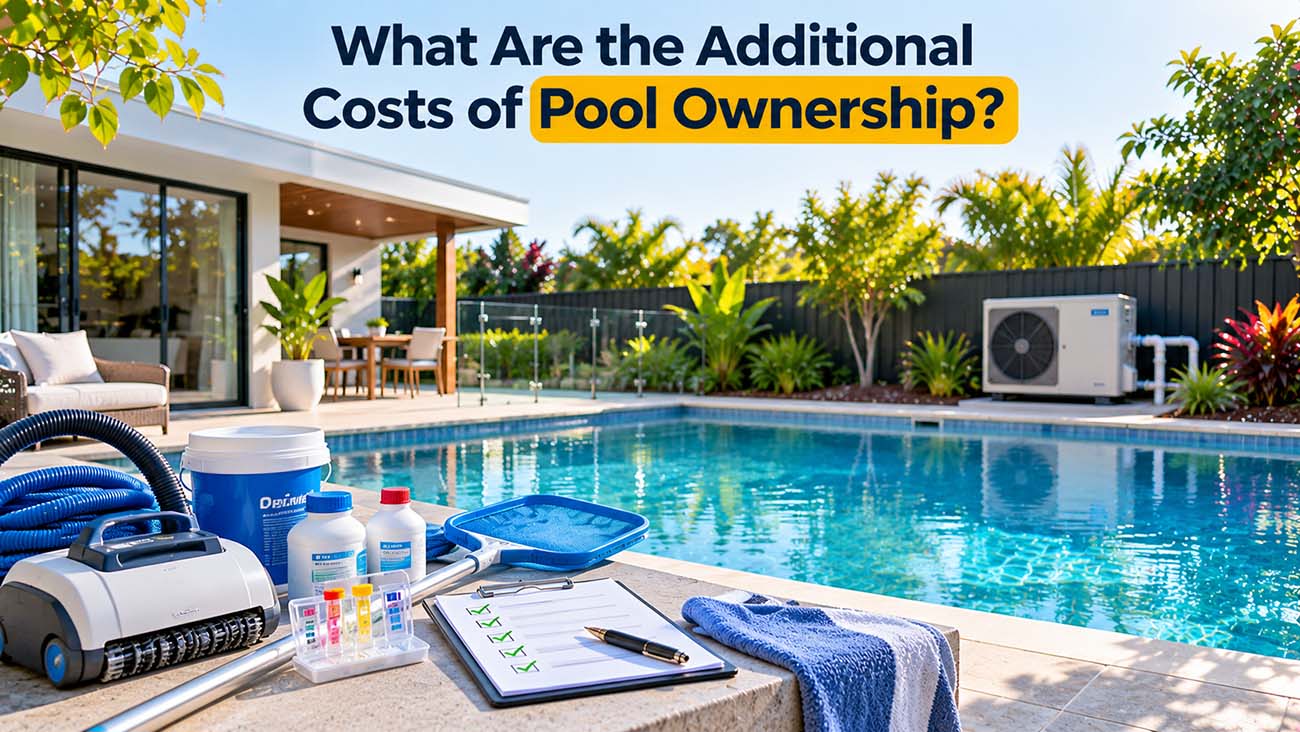
Beyond the regular running costs, there are other expenses that new owners don’t always plan for:
- Professional servicing if you’d rather not do the routine work yourself.
- Pool safety inspections where required, such as when selling or leasing (covered below).
- Repairs to surfaces, tiles and surrounds, including cracked coping, damaged tiles and worn pool finishes.
- Covers and accessories, such as solar blankets and rollers.
- Heating, which adds both equipment and running costs.
- Garden and landscaping upkeep around the pool, particularly trimming vegetation near the fence and clearing leaf litter.
- Test kits and cleaning tools, which need replacing from time to time.
Optional features such as heating, waterfalls, fountains and lighting are enjoyable, but they add to both running and maintenance costs.
What Pool Safety Requirements Should Queensland Homeowners Know?
Pool safety is a legal responsibility, and in Queensland it continues for as long as you own the pool. The following is a summary of Queensland Government and QBCC guidance. For your own pool, check the current rules or speak to a licensed pool safety inspector.
Under the QBCC’s swimming pool safety laws, a pool is any structure that can hold water 300mm deep or more and is used mainly for swimming, wading or paddling. That includes spas and some inflatable pools. As an owner you must:
- register your pool with the QBCC
- have a pool fence that meets the pool safety standard, and keep it compliant
- get a pool safety certificate when selling or leasing the property
- keep pool gates closed
- keep the pool area clear of objects children could use to climb in
Fences, Gates and Non-Climbable Zones
According to the Queensland Government’s page on pool fences and barriers, a pool barrier must be well maintained at all times, and damage must be repaired immediately. The page lists common reasons barriers fail:
- gates that don’t self-close and self-latch from every position
- a barrier lower than 1200mm, often because garden beds and ground levels have risen over time
- climbable rails on adjoining boundary fences
- windows opening into the pool area by more than 100mm
- climbable objects placed near the fence, such as furniture, pots or planters
The same guidance recommends trimming back climbable vegetation and keeping climbable objects away from the barrier. Where a dividing fence also works as the pool barrier, you and your neighbour share responsibility for maintaining it.
CPR Signs
Pool owners must display a CPR sign. The Queensland Government’s CPR and warning signs page says the sign must be visible from near the pool, at least 300mm x 300mm, made of durable weatherproof material, and show CPR instructions that follow the current Australian guideline.
Existing Pools Aren’t Automatically Compliant
Don’t assume that a pool is compliant just because it has been used for years or was approved in the past. Fences age, gates sag, garden beds rise and standards change. Even a pool with a certificate can be fined by council if the barrier doesn’t comply. If you aren’t sure, the QBCC recommends engaging a licensed pool safety inspector to confirm compliance.
Electrical Safety
Pool electrics are covered by their own safety rules. Queensland’s electrical safety regulator says a licensed electrician must install and maintain pool wiring and electrical equipment. It also advises using safety switch protection, checking underwater lights regularly for cracked glass or faulty seals, and never using extension leads or plug-in appliances near the pool. Regular electrical maintenance is another cost to include in your budget.
Does Pool Maintenance Change With the Seasons?
Yes, though a pool never needs to be ignored. Whatever the season, the water still has to be kept clean and balanced.
Summer Maintenance
Summer is when the pool works hardest. More swimming, more sunscreen and body products in the water, and hotter weather all raise the demand on filtration and sanitiser. Regular water testing becomes more important, and so does checking the water level, since evaporation is higher. Summer storms can also bring in a lot of debris at once.
Autumn and Winter Maintenance
Cooler months usually mean less swimming, but not less responsibility. Falling leaves and organic matter can still foul the water and clog baskets. Pump schedules can sometimes be adjusted for cooler weather, but check this with a pool professional or the equipment manufacturer rather than cutting back without advice. Keep testing the water, since poorly maintained water can be harder and more expensive to fix later. Autumn and winter are also a good time to service equipment, check covers, and get the pool ready for the warmer months.
How Can Homeowners Reduce Swimming Pool Running Costs?
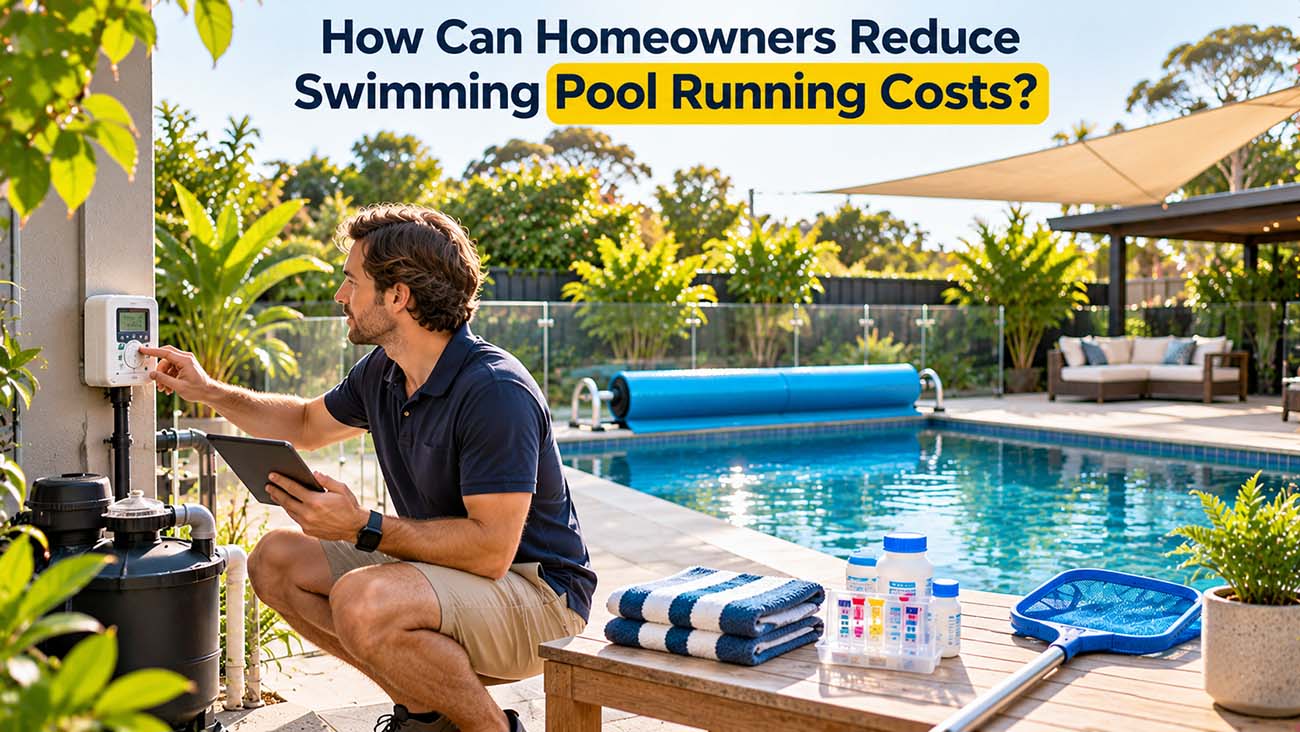
You can’t remove pool costs, but you can manage them. Practical steps include:
- Choose the right pump. The Energy Rating website advises using the smallest pump suitable for your pool, because oversized pumps cost more to run and can put extra pressure on the filter.
- Consider a variable-speed pump when replacing the old one.
- Use a timer and ask a pool professional how many hours of filtration your pool needs.
- Clean baskets and filters regularly so the pump isn’t working against blockages.
- Use a suitable cover to cut evaporation and heat loss.
- Keep the water balanced. It’s usually cheaper than correcting a problem after it develops.
- Fix small problems early, such as minor leaks, noisy pumps and worn seals.
- Compare servicing options if you use a pool service.
- Keep heating to a minimum, as the South Australian Government’s guidance suggests.
Be careful not to cut back filtration or sanitising below what’s needed for safe, hygienic water. Saving a little on power isn’t worth the risk of unsafe water or damage to the pool.
What Should You Check Before Buying a Property With a Swimming Pool?
This is where the hidden costs matter most. Before you commit, it’s worth going through a checklist:
- How old is the pool, and what condition is it in?
- When was the pump last serviced, and is the filtration system working properly?
- Are there visible leaks, cracks or damaged tiles?
- Is the pool surface in good condition?
- Is the pool fence compliant, and are the gates self-closing and self-latching?
- Is there a current pool safety certificate?
- What sanitising system does the pool use (for example, chlorine or a salt chlorinator)?
- Is there a heating system, and what condition is it in?
- Are there extra water features such as a spa, waterfall or lighting?
- What maintenance will the pool realistically need?
- Are there records of past repairs and servicing?
The pool safety certificate deserves particular attention. The QBCC explains that when a property with a pool is sold, a pool safety certificate must be obtained. A seller with a current certificate must give the buyer a copy before settlement. Certificates are valid for two years for non-shared pools and one year for shared pools. If there is no certificate, the seller lodges a Form 36 (notice of no pool safety certificate), and the buyer of a non-shared pool must then obtain a certificate within 90 days of settlement. In that case, any repairs needed to make the fence compliant fall to you as the new owner, so it’s worth allowing for them when you decide what you can afford.
A visual inspection only shows so much. Consider arranging a building inspection, speaking with a pool professional about the equipment, and using a licensed pool safety inspector to check the barrier. If you want to see how sellers approach this, our guide on selling a home with a pool explains what’s usually involved on the other side of the transaction.
Is a Home With a Swimming Pool Worth the Ongoing Costs?
It depends on your household. A pool tends to make sense when it will be used often, when the pool and equipment are in good condition, and when you’re comfortable with the routine of looking after it. For a family that swims most days of the year, the lifestyle benefits can outweigh the costs. For someone who travels a lot, prefers low-maintenance living, or is stretching their budget to buy, a pool may be more of a burden than a pleasure.
The best approach is to look at both sides honestly. Think about how you’d really use the pool, estimate the upkeep with the help of a pool professional, and factor in safety compliance. If you do that before you buy, you’re far less likely to be surprised later.