
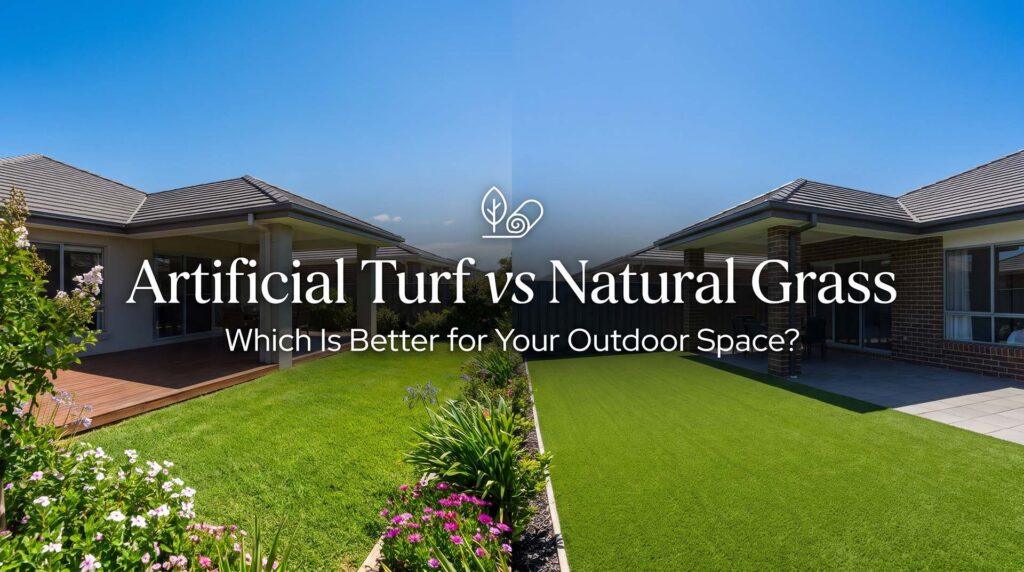
Few backyard decisions split households like the choice between artificial turf vs natural grass. One person pictures a perfectly green carpet that never needs mowing, while the other imagines bare feet on cool, living grass. Both have a point, and the right answer depends far more on your property than on any rule of thumb.
This guide compares artificial turf vs natural grass for Australian homes, with the Gold Coast’s warm climate, outdoor lifestyle and heavy summer rain in mind. It covers installation costs, maintenance, drainage, durability, pets and children, heat and the environment, then finishes with a checklist you can use before getting quotes. Neither option is automatically better. The aim is to help you choose the one that suits your block, your household and your budget.
If you’re considering buying a home on the Gold Coast, explore our property buying services to learn more about the buying process.
This article is general information only. Prices, products and rules change, so get written quotes and advice from qualified landscapers or installers for your own property.
What Is the Difference Between Artificial Turf and Natural Grass?
Artificial turf
Artificial turf (also called artificial grass, synthetic turf or fake grass) is made from manufactured synthetic fibres designed to look like grass. It is usually laid over a prepared base and joined with tape. Many products also use an infill, a material such as sand spread over the surface to hold the turf in place and help the fibres stand up. It does not grow, so it does not need mowing.
Natural grass
Natural grass is living turf growing in soil. It needs suitable sunlight, soil, water and ongoing care, but it can recover and regrow when it is looked after. It gives you a living surface for play, relaxing and gardening.
Both options vary a lot. Artificial turf products differ in material, pile height (the length of the fibres), backing, infill and overall quality. Natural lawns differ by grass species, shade, soil and how they are managed. A cheap, thin artificial lawn and a premium one are very different products, just as a shaded patch of struggling grass and a healthy sunny lawn are.
What Is the Installation Cost of Artificial Turf Compared With Natural Grass?
It helps to separate the upfront price from the total cost of owning the surface over time.
Artificial turf installation costs
The price depends on the size of the area, site access, ground condition, product specifications and how complex the job is. A professional installation typically includes:
- the turf itself, with price depending on quality and type;
- excavation and ground preparation;
- removal of existing grass;
- base materials and compaction;
- drainage preparation;
- underlay or shock-absorbing layers where appropriate;
- installation labour; and
- edging and finishing.
For a rough idea, CHOICE’s consumer guide to artificial grass estimated that a professional installation for a 50 square metre backyard could cost between about $3,750 and $6,500. CHOICE also said that installing artificial grass costs roughly double a natural turf lawn. Treat those figures with caution. They come from a national guide last updated in September 2023, they assume a particular area and scope of work, and they are not Gold Coast prices. Quotes for your own property will differ.
Natural grass installation costs
A new natural lawn can involve:
- rolls of turf or grass seed;
- soil preparation;
- topsoil and soil improvement;
- levelling and grading;
- irrigation installation where needed;
- labour and delivery; and
- establishment and early watering.
In some situations a natural lawn costs less to install than artificial turf, but this depends on the type of lawn and how much preparation your soil needs. A block with poor soil, steep slopes or tricky access can push costs up for either option.
Why comparing only the initial price can be misleading
The cheapest option on installation day is not always the cheapest over ten or fifteen years. A fair comparison also looks at:
- upfront installation;
- annual maintenance;
- water and electricity where relevant;
- repairs;
- infill replacement or top-ups;
- future replacement; and
- disposal costs.
A Western Australian Government decision-making guide for natural grass and synthetic turf makes a similar point for sports grounds: it recommends looking at whole-of-life costs rather than choosing the cheapest option, and notes that synthetic turf does not always have the low maintenance costs people expect. That guide covers sports fields and was published in 2011, so its cost figures do not apply to home gardens. The lifecycle-costing idea does.
Artificial Turf vs Natural Grass: Which Requires More Maintenance?
Artificial turf needs far less mowing and watering, but it is not maintenance-free. According to CHOICE, a typical routine includes hosing down dust and debris, sweeping the surface against the grain now and then to keep the fibres upright, and removing animal waste and rinsing the area as needed. Other tasks include:
- removing leaves and debris;
- pulling weeds, especially around the edges;
- washing spills before they stain;
- checking joins and seams;
- keeping drainage clear;
- cleaning up pet waste and odours; and
- topping up infill when it settles or moves.
Natural grass maintenance
A living lawn asks for more regular attention:
- mowing;
- watering or irrigation;
- fertilising;
- weed control;
- aeration where soil gets compacted;
- pest and disease management;
- repairing bare or damaged patches; and
- seasonal lawn care.
How much work that adds up to depends on the grass species, weather, soil, shade and how heavily the lawn is used. A hardy, well-suited grass in a sunny spot can be quite forgiving, while a shaded or poorly drained patch can be a constant battle. Natural grass is not always the more expensive option to look after, and artificial turf is not always the cheaper one.
How Do Artificial Turf and Natural Grass Compare for Drainage?
On the Gold Coast, where heavy downpours are part of life, drainage deserves real attention.
Natural grass lets rain soak into the soil, if the soil drains well. The Western Australian guide notes that natural grass allows water to infiltrate through the soil, which helps reduce runoff.
Artificial turf does not absorb water. It relies on its backing (which usually has drainage holes), the prepared base beneath it and the slope of the ground. When it is correctly specified and installed, it can drain effectively. When the base is poorly prepared, water can pool, joins can lift and the surface can become uneven.
Points to discuss with any installer or landscaper:
- what sub-base materials will be used and how they will be compacted;
- how the ground will slope and where the water will go;
- whether the area tends to pool after heavy rain;
- how drainage will work around garden edges and paved areas; and
- whether runoff from the surface will go somewhere sensible, not onto a neighbour’s land or straight into a stormwater drain.
It is not true that one option always drains better. A natural lawn on heavy clay can turn boggy and muddy, while a well-built artificial lawn on a properly prepared base can shed water well. The catch is that artificial turf adds a layer that water cannot pass through, so the design and workmanship matter a lot. CHOICE also quotes an urban ecology expert who notes that studies have found much more rainfall runs off artificial grass than living grass, up to 60 per cent in some cases with particularly dense fibres, which may add to runoff problems if many gardens in an area switch.
Which Is More Durable Over Time?
Artificial turf durability
How long artificial turf lasts depends on the product, the installation and how it is used. Things that affect it include:
- UV exposure and fading;
- flattening of fibres in high-traffic areas;
- seams separating;
- infill moving or washing away;
- damage from heavy furniture or sharp objects; and
- product quality and installation workmanship.
Be wary of a single lifespan figure. CHOICE reports that a well-maintained, high-quality installation can last up to 25 years, but that standard warranties tend to be around seven to ten years, so you may need substantial maintenance or replacement around that point. A warranty is a promise about what the supplier will cover, not a guarantee of how long your lawn will actually look and perform well. Check what the warranty includes and excludes. Eventually, the turf has to be removed and disposed of.
Natural grass durability
Natural grass can recover from normal wear and regrow. It can also be damaged by:
- heavy foot traffic, children and pets, which can cause bare patches and compacted soil;
- dog urine in concentrated spots;
- drought or excessive rain; and
- poor maintenance or an unsuitable grass species for the conditions.
The advantage is that damaged areas can often be patched, re-seeded or re-turfed. Heavily damaged lawns may need to be re-established.
Are Artificial Turf and Natural Grass Suitable for Pets and Children?
Artificial turf for pets
Some pet owners like artificial grass because there is less mud tracked inside and no digging damage to a lawn. CHOICE notes, though, that experiences vary. Some owners report no problems with cleaning, while others find urine odours build up, particularly in hot weather. Things to consider:
- good drainage, so urine and wash-down water do not sit in the base;
- pet-specific infills designed to absorb urine and reduce odours;
- regular cleaning and removal of waste; and
- how hot the surface gets for paws.
Owners still need to pick up pet waste and clean the surface properly.
Natural grass for pets
Natural grass is a familiar, soft surface for dogs to run and play on. The downsides can include muddy paws after rain, digging, worn patches and yellow or dead spots from urine. Lawn treatments and pest control products also need to be chosen with pets in mind. Damaged areas can be repaired but may need time to recover.
Children playing on artificial turf or natural grass
For children, think about softness, comfort, heat, falls and abrasions, and how much shade the area gets. Natural grass is generally cooler underfoot in the sun, while artificial turf can be consistent and clean but may be too hot in direct sunlight. Neither surface is completely safe. Supervision, shade and choosing a product and installation suited to children’s play all matter. If you are installing artificial turf under play equipment, ask about shock-absorbing layers and check the product is suitable for that use.
Does Artificial Turf Get Hotter Than Natural Grass?
Yes, artificial turf can get a lot hotter than natural grass in direct sun. It is plastic, so it absorbs and holds heat. Natural grass stays cooler partly because plants release water vapour through their leaves, a process that cools the surface and the air around it.
How hot a surface gets depends on sunlight, shade, wind, moisture, the material and the infill. Some artificial products use heat-reflective yarns or cooling infills. CHOICE says these can slow the heating, but results vary by product and they do not make a lawn safe in every condition.
What a recent Australian study found
Researchers at the University of Melbourne ran a backyard experiment comparing artificial turf, dry natural turf and watered natural turf in suburban Melbourne, measuring surface temperatures continuously for 51 days over summer 2023–24. In their write-up for The Conversation, they reported that the artificial turf reached 72°C at its hottest, while the natural turf never exceeded 39°C. They also reported that the artificial turf was hot enough to cause irreversible skin burns in adults for almost four hours a day during the experiment. They note that the temperature needed to burn children’s skin is roughly 2°C lower, and that babies, older people and pets are at particular risk because they may not move away quickly.
This was one study in Melbourne, under specific conditions and with particular products, so it does not mean every artificial lawn in Queensland will hit the same temperatures. Gold Coast summers are warm and humid, and the effect of shade, wind, product choice and watering will vary from yard to yard. The main takeaway is that unshaded artificial turf can become uncomfortably or dangerously hot, and that shade makes a big difference to comfort in any backyard. Check the surface with your hand on hot days before letting children or pets onto it.
What Are the Environmental Considerations?
Both options have trade-offs, and the overall impact depends on manufacturing, installation, water use, maintenance, site conditions and what happens at the end of the product’s life.
Artificial turf
- It can reduce routine lawn watering and avoids mowing and many lawn chemicals.
- It is made from synthetic materials, and manufacturing uses energy.
- CHOICE reports concerns about its effect on soil life and the wider environment, and says preliminary studies have found a larger carbon footprint than natural turf when manufacture, installation, maintenance and disposal are all counted.
- It can add to surface heating.
- It eventually needs to be removed and disposed of, and much of it ends up in landfill.
- Some products may release plastic fibres or infill into the surrounding environment, particularly if drainage carries material away. CHOICE notes that the amount released from backyard lawns has not been studied.
Natural grass
- It supports soil organisms and small-scale biodiversity.
- It can provide cooling through shading and evapotranspiration (plants releasing water vapour).
- It lets water soak into the ground when soil conditions suit.
- It needs water and ongoing care, and may need fertiliser and other treatments.
The Australian Government’s YourHome guide on landscaping and garden design takes a clear position. It describes synthetic grass products as an inappropriate choice for sustainable landscapes, saying that non-living plant substitutes reduce rather than add to biodiversity, are made using fossil fuels, water and energy, and do not provide the cooling benefits of planting. That is the guidance of that particular resource, which focuses on sustainable design. Many homeowners weigh it against practical concerns such as water use, shade, time and budget. Neither lawn type is universally the “green” choice. Conventional lawns also use a lot of water, fertiliser and energy, which is why YourHome suggests ways to reduce those impacts, such as choosing turf that needs less water and fertiliser, replacing exotic grasses with drought-tolerant native grasses that still look like a lawn, or reducing the size of the lawn.
How Can Homeowners Choose the Right Option for Their Outdoor Space?
Artificial turf may suit households that:
- want to cut back on mowing and routine lawn care;
- have areas where natural grass struggles to grow, such as a heavily shaded side yard;
- like a consistently green-looking surface;
- need a surface for regular use, provided the product is suitable for it; and
- are comfortable with the upfront cost, ongoing cleaning and eventual replacement.
Natural grass may suit households that:
- prefer a natural outdoor environment;
- have children or pets who use the lawn a lot;
- want a cooler surface in sunny conditions;
- value soil health and biodiversity; and
- have suitable soil, sunlight and time for upkeep.
Alternatives and mixed approaches
You do not have to choose only one surface. Options worth considering include:
- drought-tolerant natural grass;
- native groundcovers;
- mulched garden beds;
- permeable paving or gravel, which lets rain soak through; and
- a combination of lawn, planting and hard landscaping.
For example, a family might keep natural grass in the sunny part of the yard where the kids play, use garden beds along the fence line, and consider artificial turf only for a small, shaded corner where grass will not grow. YourHome also notes that reducing hard surfaces helps limit stormwater runoff from your site.
What Should You Check Before Installing Artificial Turf or Natural Grass?
Work through these questions before you commit:
- How much sunlight does the area get during the day and across the seasons?
- Does the soil drain well?
- Is the site sloped or flat?
- Does water collect after heavy rain?
- Will children or pets use the area?
- Is the surface exposed to strong afternoon sun?
- How much time can your household realistically spend on maintenance?
- What is the total budget, including preparation, edging and any irrigation or drainage work?
- What are the expected annual maintenance needs and costs?
- What warranty and installation details are offered, and what do they actually cover?
- How will the surface be repaired or replaced in future?
- Is the proposed work compatible with your existing drainage, paving and landscaping?
Get written quotes from more than one supplier, and ask installers how they prepare the base, how they handle drainage and how they join and secure the turf. If any of the work is on a nature strip or council land, check with your local council first, as CHOICE notes that councils can set their own limits. If you are in a body corporate or estate, check the by-laws or design guidelines before making changes. For context on the local climate, the Queensland Government’s climate information pages link to regional resources.
Artificial Turf vs Natural Grass: Which Is Better for Your Outdoor Space?
Neither option wins in every backyard. Artificial turf can reduce mowing and routine watering, but it involves a higher upfront cost, regular cleaning, careful drainage design, heat exposure in direct sun and eventual replacement and disposal. Natural grass needs regular care and water, but it gives you a living surface that stays cooler, supports soil life and can recover from some types of damage.
The best choice depends on your block’s sunlight, soil and slope, how your household uses the space, how much time and money you have and what matters most to you in the long run. In many yards, the answer is a mix: living lawn where it thrives, plants and permeable surfaces where it does not, and artificial turf only where it genuinely solves a problem.