

Two properties can look equally appealing at an open home, yet one may demand far more time, money and effort to look after over the years. That difference is often what people mean when they search for a low-maintenance property, and it is rarely obvious from a listing photo.
A low-maintenance property is not a property that needs no maintenance. Every building needs care. Rather, it is a home whose materials, outdoor spaces, layout and ownership arrangements make routine upkeep more manageable and the likely costs easier to understand. The main factors to weigh up are:
- Building materials and finishes
- Landscaping and outdoor areas
- Shared facilities and body corporate arrangements
- Building age and overall condition
- Who is responsible for maintaining what
- Future repair and replacement costs
These considerations matter to owner-occupiers who want to spend weekends enjoying their home rather than repairing it, and to investors who need to understand the ongoing expenses that sit behind a rental return. This guide walks through each factor, with a focus on Gold Coast conditions and Queensland rules, and finishes with a practical checklist.
What Does Low-Maintenance Property Actually Mean?
In practical terms, a low-maintenance property generally:
- Needs less frequent routine upkeep
- Uses durable materials that suit its location
- Has outdoor spaces that are manageable in size and design
- Has fewer complicated systems or features to look after
- Has clearly understood maintenance responsibilities
- Has building systems and facilities that are reasonably straightforward to maintain
It is important to separate “low-maintenance” from “low-cost”. A home may need less regular work but still carry expensive repairs, insurance, body corporate levies or equipment replacement costs down the track. Less effort does not automatically mean lower expense, and a property should never be judged low-maintenance purely on the strength of a listing description or marketing language.
Building Materials and Finishes That Can Make a Difference
The materials used inside and outside a property influence how often it needs cleaning, sealing, painting or repair. No material is maintenance-free, and performance depends on quality, installation, protective coatings and exposure to the elements.
Exterior Materials
Common external materials on Gold Coast homes include:
- Brick and masonry: brickwork generally does not need regular repainting, but mortar, moisture and drainage issues still need attention.
- Fibre cement cladding: typically needs its paint system and joints checked over time.
- Rendered finishes: painted render may need cleaning and repainting as it weathers, and cracks should be investigated rather than simply painted over.
- Timber cladding: may need periodic staining, painting or protective treatment, particularly in strong sun and humid conditions.
- Metal roofing: can be durable, but coatings, fixings and corrosion protection matter, especially where salt-laden air is a factor.
- Concrete and other external surfaces: driveways, paths and patios can crack, stain or grow mould and algae in damp, shaded spots.
Gold Coast conditions are a real consideration. Strong sun, humidity, heavy rain and, closer to the water, coastal exposure can all affect how quickly finishes and fixings age. A material that performs well in one location may need more attention in another, so it is worth asking how the property has been maintained rather than assuming a material will look after itself.
Interior Finishes
Inside the home, durable and easy-to-clean finishes can reduce everyday upkeep. Points worth looking at include:
- Flooring that resists scratches, moisture and wear
- Kitchen benchtops and cabinet finishes that are hard-wearing and simple to clean
- Bathroom surfaces and grout in good condition
- Wall and ceiling finishes that are not showing stains, peeling or mould
A finish that is easy to clean is only helpful if it is also good quality, suited to its use and repairable. A chipped benchtop or damaged floor that cannot be repaired easily can turn a “low-maintenance” feature into an expensive replacement.
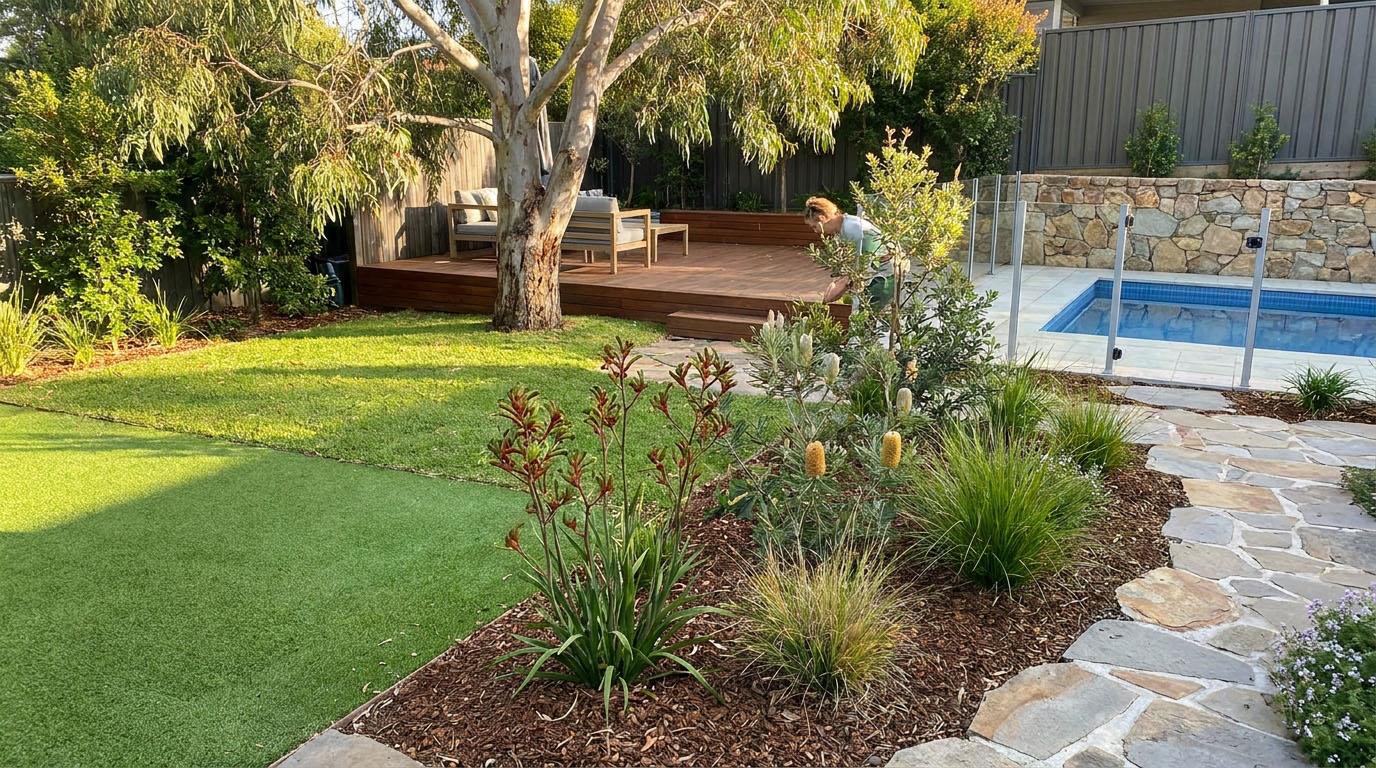
Landscaping and Outdoor Areas: How Much Work Will They Need?
Outdoor spaces can make a large difference to the time and money a property demands. A large block with extensive gardens, mature trees and lawn can be wonderful, but it comes with regular work.
Garden Size and Plant Selection
When assessing a garden, consider:
- Large lawns compared with compact garden areas
- Plants suited to local climate conditions, which can reduce watering and routine care
- Slow-growing shrubs rather than fast-growing species that need frequent trimming
- Mulched garden beds and the irrigation they rely on
- Large trees that need pruning, leaf clearing and gutter cleaning
Native and climate-suited plants can help, but they are not automatically no-maintenance. They still need establishment care, pruning and occasional replacement. Trees and shrubs also need to be kept clear of the house, and YourHome lists trimming trees and shrubs away from the building and cleaning gutters regularly among routine tasks.
Artificial Turf vs Natural Grass
Many buyers look at artificial turf as a way to cut down on lawn work, and it does change the maintenance picture rather than remove it:
- Artificial turf reduces mowing and routine lawn watering.
- It still needs cleaning, occasional brushing and drainage checks.
- Natural grass needs mowing, watering and other lawn care.
- Natural grass can recover from some kinds of damage, while artificial turf may eventually need repair or replacement.
Artificial turf can also become hot in direct sunlight, and how well it drains depends heavily on how it was installed. It is not automatically the cheaper or better option. Which suits a property depends on the size of the area, how it is used, how much shade it gets and the quality of the installation.
Pools, Spas and Other Outdoor Features
Attractive outdoor features can improve lifestyle, but each one adds upkeep. Look at:
- Swimming pool cleaning and water treatment
- Pool equipment and pump maintenance
- Spa servicing
- Outdoor lighting
- Decking and pergolas, which may need sealing, staining or repair
- Retaining walls and drainage
Pools also come with compliance requirements. The Queensland Building and Construction Commission advises buyers to check that a pool meets the pool safety standard, and the seller should provide either a current pool safety certificate or a notice that there is no certificate before the contract is signed. These features can be well worth having, but they should be assessed for their ongoing costs and responsibilities, not only their appeal.
Do Shared Facilities Make a Property Easier to Maintain?
Townhouse complexes, gated communities and apartment developments often include shared facilities such as gardens, swimming pools, driveways, lifts, tennis courts and recreational areas, along with common building structures. These can change how owners deal with maintenance.
Potential advantages include:
- Owners may not need to maintain shared areas individually.
- Professional contractors may manage routine work on common areas.
- Shared arrangements can reduce the number of services each owner has to organise.
The Queensland Government notes that a body corporate can, by agreement, arrange services that owners are otherwise responsible for, such as mowing yards within lots or cleaning and painting exteriors, and that it can be cheaper or easier to organise this for many lots at once. Those service charges are paid by the users and are not part of the body corporate levies, according to the Queensland Government.
There are also trade-offs to weigh:
- Body corporate levies
- Shared repair and replacement expenses
- Possible special levies
- By-laws that limit changes to individual lots
- Reliance on the body corporate’s financial and maintenance planning
Shared maintenance is not free maintenance. The cost is spread across owners and paid through levies rather than invoices from your own contractors. For a deeper look at how levies work, you can read the Queensland Government’s guidance on buying a body corporate property.
Understanding Body Corporate Maintenance Responsibilities
This is one of the most misunderstood areas for Queensland townhouse and unit buyers. In general, a body corporate must maintain the common property in a good and structurally sound condition, while the owner of a lot must maintain their lot in good condition. But the exact split is not identical from one scheme to the next.
The Queensland Government explains that the first step is to find out which plan of subdivision the scheme is registered under and which regulation module applies. The registered survey plan shows the boundaries of lots and common property, and the community management statement identifies the regulation module. The two common types of survey plan are building format plans and standard format plans, and they define boundaries differently, which affects who maintains what.
Responsibility can also depend on where an item sits and how the scheme is set up:
- Lot owner responsibilities: keeping the lot in good condition, including preventing damage such as termite damage within the lot.
- Common property: generally the body corporate’s responsibility, including pest inspection and treatment on common property.
- Exclusive-use areas: an owner may have the right to use, and sometimes maintain, a part of the common property such as a courtyard or balcony, depending on the by-laws.
- Shared infrastructure and boundary items: items such as fences or services on a boundary may be decided by the plan, the by-laws or where the item was installed.
The body corporate does not automatically cover every external or structural item, and not every townhouse owner has the same responsibilities. Always check the documents for the specific scheme rather than relying on assumptions.
What Should Buyers Check?
Before signing a contract for a body corporate property, review:
- The body corporate certificate
- The community management statement
- The registered survey plan
- Current levies
- Administrative fund and sinking fund information
- Financial statements
- Maintenance records
- Known building defects
- Planned repairs and special levies
The administrative fund and the sinking fund are not the same thing. Generally, the administrative fund covers the day-to-day running costs of the scheme, while the sinking fund is set aside for longer-term capital items such as major repairs and replacements. A healthy-looking levy figure alone does not tell you whether a scheme is planning properly for future work, so look at both funds and ask about any planned works.
Buyers can also ask in writing, for a fee, to see the body corporate’s records, including committee and general meeting minutes and contracts the body corporate is party to. Owners contribute to those contracts through levies, as outlined in the Queensland Government’s buying a body corporate property page. If you are unsure how to interpret these documents, a solicitor or a qualified professional can help.
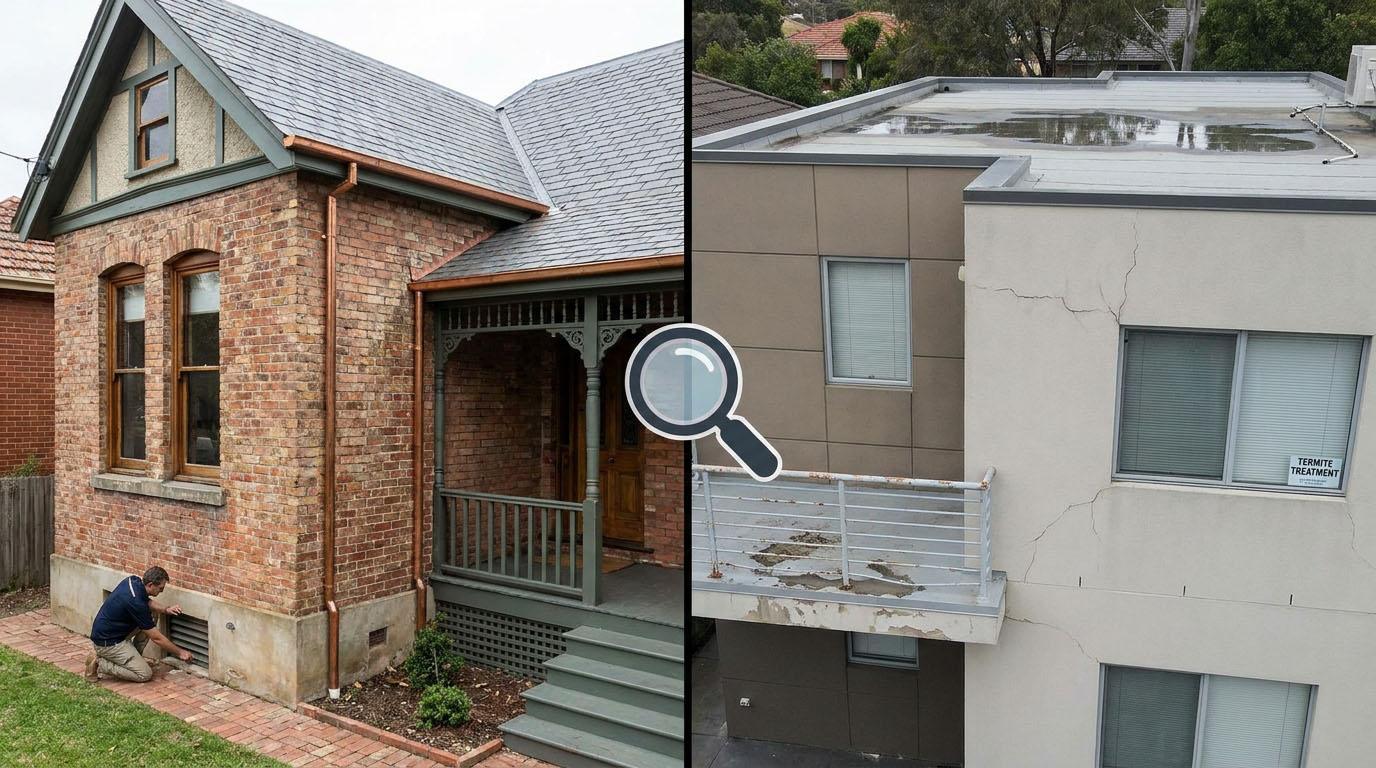
Does Building Age Affect Maintenance Requirements?
Age is one consideration, but it should not be the only one. An older, well-maintained home can be easier to manage than a newer home with poor workmanship or unresolved defects, and newer homes can still develop maintenance issues. Renovations and replacements may also have happened at different times, so one building can contain components of very different ages.
Rather than relying on the year of construction, look at actual condition:
- Roof condition
- Plumbing and drainage
- Electrical systems
- Waterproofing, particularly in wet areas
- Windows and doors
- Paint and external finishes
- Hot water systems
- Air conditioning
- Signs of moisture, mould or termite damage
YourHome highlights leaks, cracks and settlement, damp and termites as problems that benefit from early attention and expert advice, and recommends a regular maintenance schedule. It also suggests an annual termite inspection by a licensed inspector. For older homes, the QBCC notes that building inspectors will point out possible asbestos, which can require extra precautions and cost more to deal with if renovating.
What Future Maintenance and Replacement Costs Should Buyers Consider?
Smart buyers look beyond routine cleaning and gardening to the larger items that may come up during ownership. Depending on the property, these can include:
- Roof repairs or replacement
- Repainting
- Hot water system replacement
- Air-conditioning repairs
- Plumbing and drainage work
- Waterproofing
- Fencing and retaining walls
- Pool equipment
- Solar system maintenance
- Landscaping and tree maintenance
- Shared facility upgrades and body corporate special levies
Some of these costs are predictable and can be planned for, while others depend on the property’s condition and unexpected events such as storms. Costs and lifespans vary widely with quality, installation, location and use, so it is best to get condition-specific advice and quotes rather than relying on general rules of thumb.
The Role of Property Inspections
The Queensland Government recommends arranging inspections before negotiating so you can understand the property’s condition and factor in future costs. The main types are building, pest, swimming pool and solar system inspections, and inspectors should hold the appropriate QBCC licence. For solar, it suggests asking the seller for warranty documents and installer maintenance schedules.
It is worth remembering what an inspection can and cannot do. According to the QBCC, a pre-purchase building inspection looks for obvious defects and areas of concern, such as roof problems, leaks, cracked walls, mould, waterproofing and drainage issues, but it is not a warranty against future defects. The QBCC also warns that if you buy a home knowing about defects, you may not be able to claim on the Queensland Home Warranty Scheme for them, so understanding the report before you commit matters.
Is a Townhouse More Low-Maintenance Than a Detached House?
Not necessarily. A townhouse often has a smaller outdoor area and some exterior maintenance handled through the body corporate, which many owners find convenient. But those benefits come with levies, shared costs and rules. A detached house gives you control over the whole property, along with responsibility for all of it. The comparison below summarises the general trade-offs; individual properties vary.
| Consideration | Townhouse (body corporate) | Detached house |
|---|---|---|
| Outdoor areas | Often smaller, with less individual garden work | Often larger, with more lawn, garden and exterior to care for |
| Common areas | Maintained by the body corporate, funded through levies | Usually not applicable |
| Ongoing costs | Body corporate levies and possible special levies | No regular body corporate levies in many cases, although other shared arrangements may exist |
| Control over decisions | Shared decisions and by-laws can limit changes | Greater control over maintenance and improvements |
| Responsibility | Depends on the plan, regulation module and by-laws | The owner is responsible for the whole lot |
Neither option is always easier or cheaper to maintain. The right answer depends on the specific property, the scheme and how you plan to use it.
A Practical Low-Maintenance Property Checklist for Buyers and Investors
Use these questions as a starting point when inspecting a property and reviewing its documents.
Building and Materials
- What is the condition of the roof, walls and external finishes?
- Are the materials suitable for the local climate?
- Are there visible cracks, leaks, dampness or signs of deterioration?
- What is the condition of the plumbing and electrical systems?
Outdoor Areas
- How much lawn and garden maintenance will be required?
- Are the plants suitable for the local climate?
- Is drainage working properly?
- Are there pools, spas, retaining walls or other features requiring ongoing care?
Shared Facilities
- What shared facilities are included?
- What are the current body corporate levies?
- Who is responsible for maintaining different areas?
- Are there upcoming repairs or planned upgrades?
Future Costs
- What equipment may need replacement soon?
- Are maintenance and inspection records available?
- Has a building and pest inspection been completed?
- Are there known defects or unresolved maintenance issues?
Investment Considerations
- How might maintenance affect ongoing ownership costs?
- Are there recurring expenses that could affect rental returns?
- Is the property suitable for the intended rental or owner-occupier market?
How to Choose a Low-Maintenance Property That Suits Your Needs
The best choice depends on your budget, household lifestyle, available time for upkeep, preferred property type, outdoor space, building condition, shared facilities and long-term ownership plans. A busy household may happily pay body corporate levies to avoid managing a large garden, while another owner may prefer the control of a detached home and accept the extra work.
Investors should assess maintenance alongside rental demand, location, insurance, rates and other ownership expenses, rather than treating any single feature as a guarantee of a strong return. Owner-occupiers should think honestly about how much time and effort the household wants to spend on upkeep.
The goal is not to find a low-maintenance property that never needs attention. It is to understand the likely responsibilities and costs before you buy. If you would like help assessing a property, you can learn more about our property buying services on the Gold Coast. This article is general information only and is not legal, financial or building advice.
References
- Queensland Government, Buying a body corporate property
- Queensland Government, Body corporate maintenance
- Queensland Government, Maintenance issues not specifically covered in the Act
- Queensland Government, Inspections
- YourHome, Repairs and maintenance
- Queensland Building and Construction Commission, Before you buy and sell